Industri pembinaan sedang berubah.
Hari ini, memahami bagaimana bangunan dibina di tapak masih penting, tetapi graduan juga perlu memahami bagaimana bangunan itu dirancang, dimodelkan, diselaras dan diurus dalam persekitaran digital.
Sebab itu, selepas memberi pendedahan kepada pelajar terhadap kemahiran pembinaan secara amali, satu lagi aspek yang saya lihat perlu diperkukuhkan ialah kompetensi digital melalui Building Information Modelling (BIM).
Bagi saya, BIM bukan sekadar belajar menggunakan perisian Revit.
Ia melatih pelajar untuk berfikir tentang bangunan sebagai satu sistem maklumat.
Apabila mereka membina model BIM, mereka perlu memahami hubungan antara dinding, lantai, bumbung, pintu, tingkap, aras bangunan, bahan, ruang dan dokumentasi projek.
Satu perubahan pada model boleh memberi kesan kepada maklumat yang lain.
Di situlah pembelajaran menjadi lebih daripada sekadar “melukis menggunakan komputer”.
Pelajar mula memahami konsep ketepatan maklumat, penyelarasan, konsistensi dan integrasi, perkara yang semakin penting dalam pengurusan projek pembinaan moden.
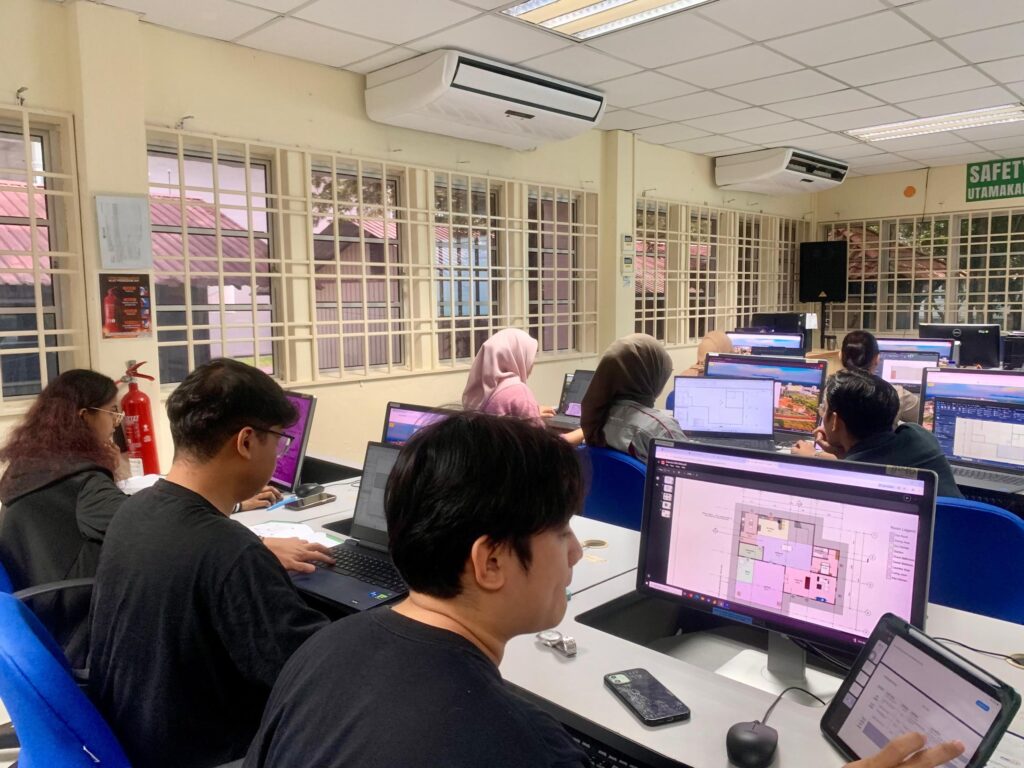
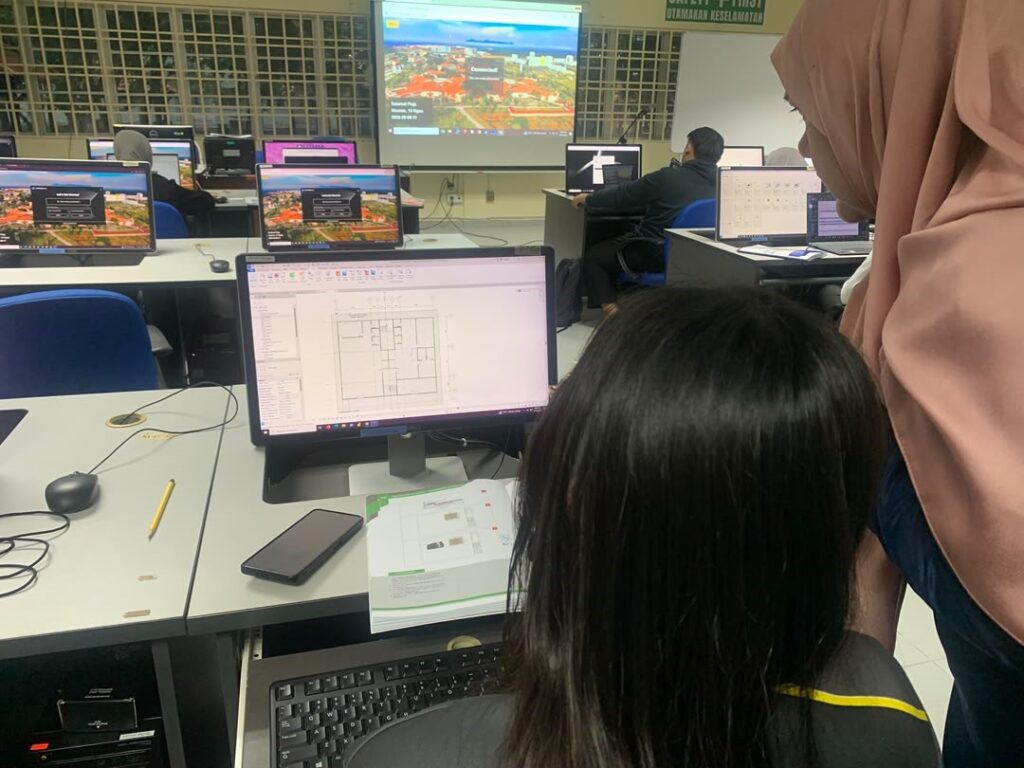
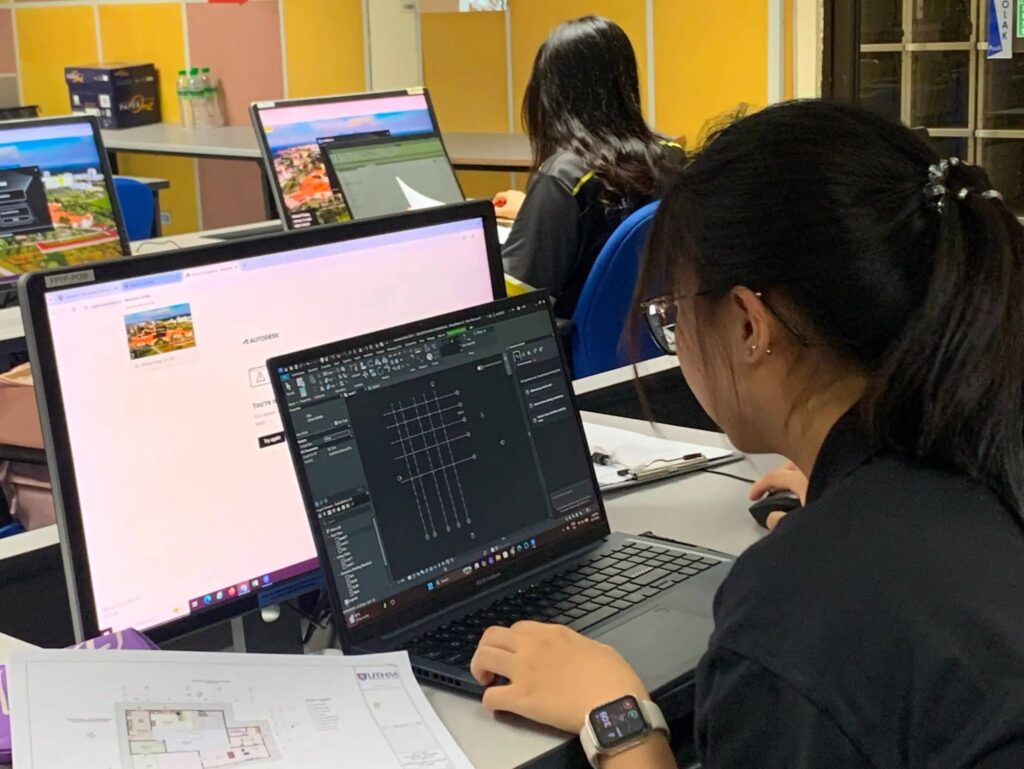
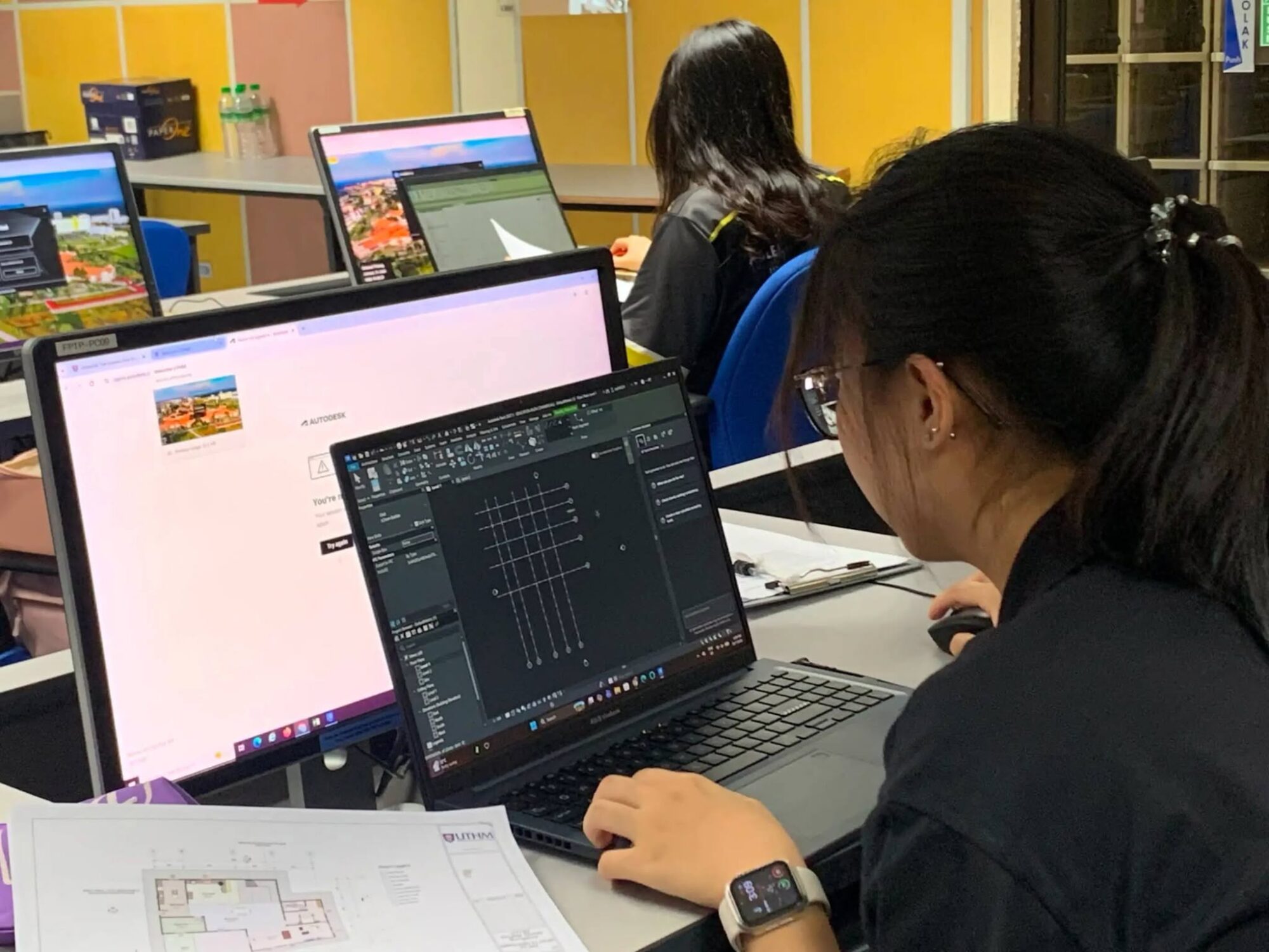
Melalui Program Sijil Kompetensi BIM Revit Architecture, saya mahu pelajar BPC mendapat pengalaman menggunakan teknologi yang kini menjadi sebahagian daripada transformasi digital industri pembinaan.
Mereka bukan sahaja mengikuti latihan, tetapi perlu menghasilkan model, melengkapkan tugasan dan melalui penilaian kompetensi berdasarkan keupayaan mereka menggunakan BIM.
Ini penting kerana terdapat perbezaan antara:
pernah menggunakan Revit
dan
mampu menunjukkan kompetensi menggunakan Revit.
Sebagai penyelaras, saya melihat pembangunan graduan tidak seharusnya tertumpu kepada satu jenis kemahiran sahaja.
Pelajar Pengurusan Pembinaan perlu memahami realiti kerja di tapak, tetapi pada masa yang sama mereka juga perlu bersedia dengan cara industri akan bekerja pada masa hadapan.
Sebab itu saya melihat kedua-duanya sebagai saling melengkapi:
kemahiran pembinaan fizikal + kompetensi digital + pemahaman pengurusan
Seorang graduan mungkin tidak menjadi pemodel BIM sepenuh masa.
Namun apabila mereka menjadi pengurus projek, penyelaras BIM, pegawai kontrak, pengurus pembinaan atau profesional industri, kefahaman terhadap model digital akan membantu mereka berkomunikasi, menyelaras maklumat dan membuat keputusan dengan lebih baik.
Inilah antara arah pembangunan yang saya mahu terus usahakan untuk pelajar BPC.
Bukan sekadar mengajar teknologi kerana teknologi sedang popular.
Tetapi memberi peluang kepada pelajar menguasai teknologi yang sedang mengubah cara industri pembinaan merancang, berkomunikasi dan melaksanakan projek.
Daripada memahami kerja di tapak kepada memahami bangunan dalam persekitaran digital.
Graduan pembinaan masa hadapan perlu mampu bergerak dalam kedua-dua dunia.
#BIM #RevitArchitecture #PembinaanDigital #BPC #UTHM #CIDB #PengurusanTeknologiPembinaan #KompetensiDigital #KebolehpasaranGraduan #TransformasiDigital #IndustriPembinaan
From the Construction Site to the Digital Model: Building BIM Competency for Future Construction Graduates
The construction industry is changing.
Today, understanding how a building is constructed on site remains essential, but graduates must also understand how buildings are planned, modelled, coordinated, and managed in a digital environment.
That is why, alongside practical construction exposure, another area that I believe deserves strong emphasis is digital competency through Building Information Modelling (BIM).
For me, BIM is not simply about learning how to use Revit.
It trains students to think about a building as an integrated information system.
When students develop a BIM model, they need to understand the relationship between walls, floors, roofs, doors, windows, building levels, materials, spaces, and project documentation.
A change in one part of the model can affect other related information.
This is where the learning goes beyond simply “drawing on a computer”.
Students begin to understand the importance of accuracy, coordination, consistency, and integration, all of which are increasingly important in modern construction management.
Through the BIM Revit Architecture Competency Certification Programme, I want BPC students to gain hands-on experience with a technology that is now part of the digital transformation of the construction industry.
They do not simply attend the training.
They are required to develop models, complete assigned tasks, and undergo competency assessment based on their ability to apply BIM effectively.
This distinction is important.
There is a difference between:
having used Revit before
and
being able to demonstrate competency in using Revit.
As a programme coordinator, I believe graduate development should not focus on only one type of skill.
Construction Management students need to understand the realities of work on site, but at the same time, they must also be prepared for the way the industry is evolving.
That is why I see these capabilities as complementary:
practical construction knowledge + digital competency + management understanding
A graduate may not necessarily become a full-time BIM modeller.
However, when they later work as project managers, BIM coordinators, contract executives, construction managers, or other industry professionals, an understanding of digital models can help them communicate more effectively, coordinate information, and make better project decisions.
This is one of the directions I hope to continue developing for BPC students.
Not simply teaching technology because it is currently popular.
But giving students the opportunity to develop competency in technologies that are transforming the way the construction industry plans, communicates, coordinates, and delivers projects.
From understanding construction on site to understanding buildings in a digital environment.
Future construction graduates need to be capable in both worlds.
#BIM #RevitArchitecture #DigitalConstruction #BPC #UTHM #CIDB #ConstructionTechnologyManagement #DigitalCompetency #GraduateEmployability #DigitalTransformation #ConstructionIndustry