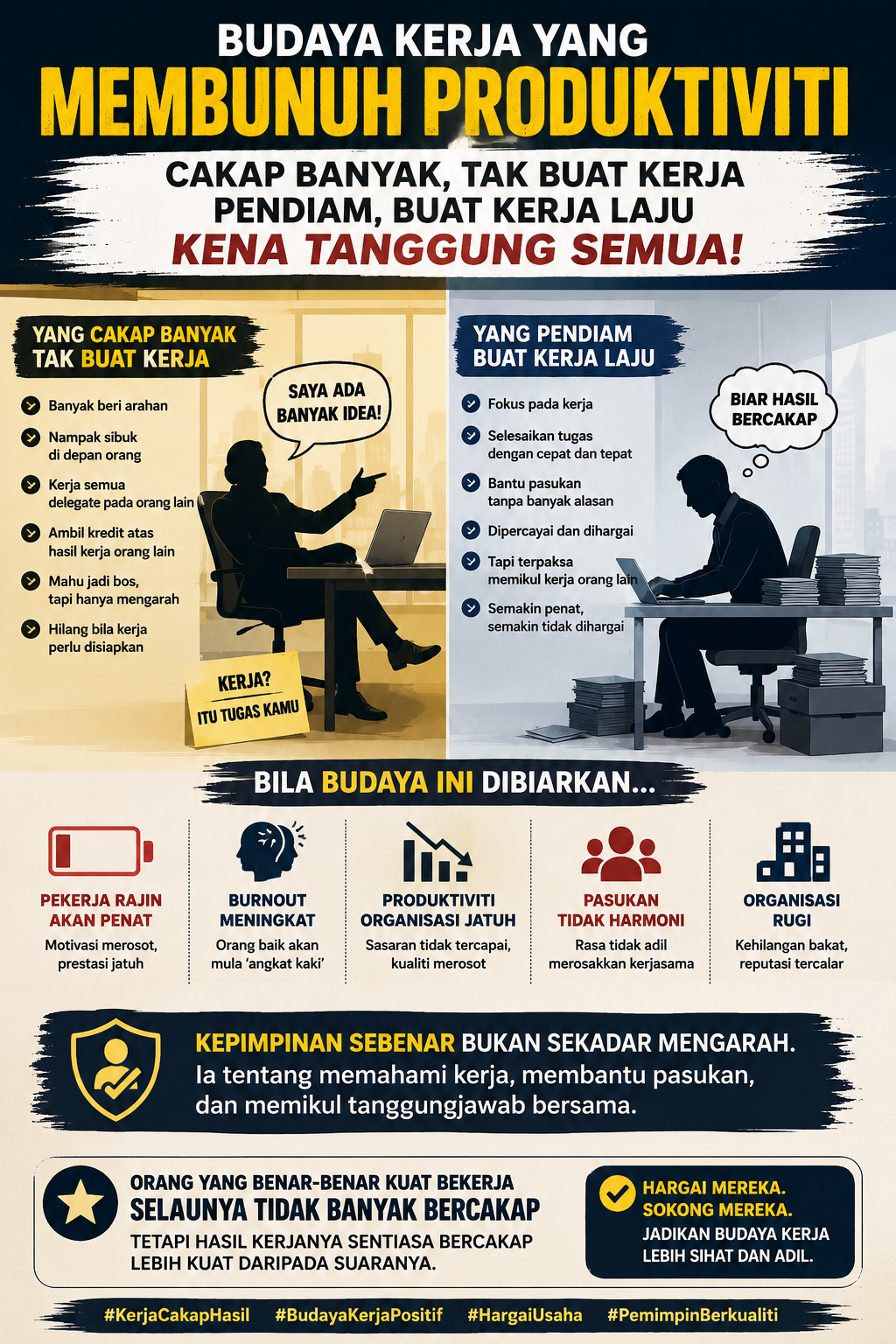
Dalam sesetengah budaya kerja, ada individu yang sangat petah bercakap, pandai memberi arahan, dan sentiasa mahu kelihatan “sibuk”.
Namun apabila tiba masa untuk benar-benar melaksanakan kerja, semuanya diserahkan kepada orang lain.
Yang menjadi mangsa selalunya ialah orang yang pendiam, cekap, dan bekerja tanpa banyak drama.
Mereka:
- buat kerja dengan cepat,
- selesaikan masalah tanpa publisiti,
- bantu pasukan tanpa banyak alasan,
- dan akhirnya dipaksa memikul kerja orang lain juga.
Lebih menyedihkan, ada yang hanya tahu:
- delegate kerja kepada staf yang lebih kompeten,
- mengambil kredit atas hasil orang lain,
- muncul hanya ketika mahu dilihat “memimpin”,
- tetapi hilang ketika kerja sebenar perlu disiapkan.
Budaya kerja seperti ini sangat berbahaya kerana:
- pekerja yang benar-benar produktif akan mula penat,
- orang rajin menjadi burnout,
- motivasi pasukan merosot,
- dan organisasi perlahan-lahan kehilangan orang yang berkualiti.
Hakikatnya, menjadi ketua bukan sekadar pandai mengarah.
Kepimpinan sebenar ialah turun memahami kerja, membantu pasukan, dan memikul tanggungjawab bersama.
Orang yang benar-benar kuat bekerja selalunya tidak banyak bercakap tentang dirinya.
Tetapi hasil kerjanya sentiasa bercakap lebih kuat daripada suaranya.
Profesor Madya Dr. Norpadzlihatun Manap
When the Loudest Person Does the Least Work
In some workplaces, there are people who talk the most, give endless instructions, and always want to appear “important.”
But when actual work needs to be done, they quietly pass everything to others.
The ones who suffer are usually the quiet, competent, and hardworking people.
They:
- complete tasks quickly,
- solve problems without seeking attention,
- carry responsibilities without complaints,
- and eventually end up doing other people’s work too.
Ironically, the same person who contributes the least often wants to act like the boss:
- constantly delegating work,
- relying on more competent colleagues,
- taking credit for team outcomes,
- and appearing only when recognition is involved.
This kind of workplace culture is dangerous because:
- productive employees become mentally exhausted,
- hardworking staff experience burnout,
- team morale slowly declines,
- and organizations eventually lose their most capable people.
Real leadership is not about giving orders all day.
True leaders understand the work, support the team, and carry responsibility together with everyone else.
The people who truly work hard are often the quietest in the room.
But their results speak louder than their voices ever need to.
Associate Professor Dr. Norpadzlihatun Manap