Wearing Many Hats in Construction Education: BIM, Soil Mechanics, and Dredging
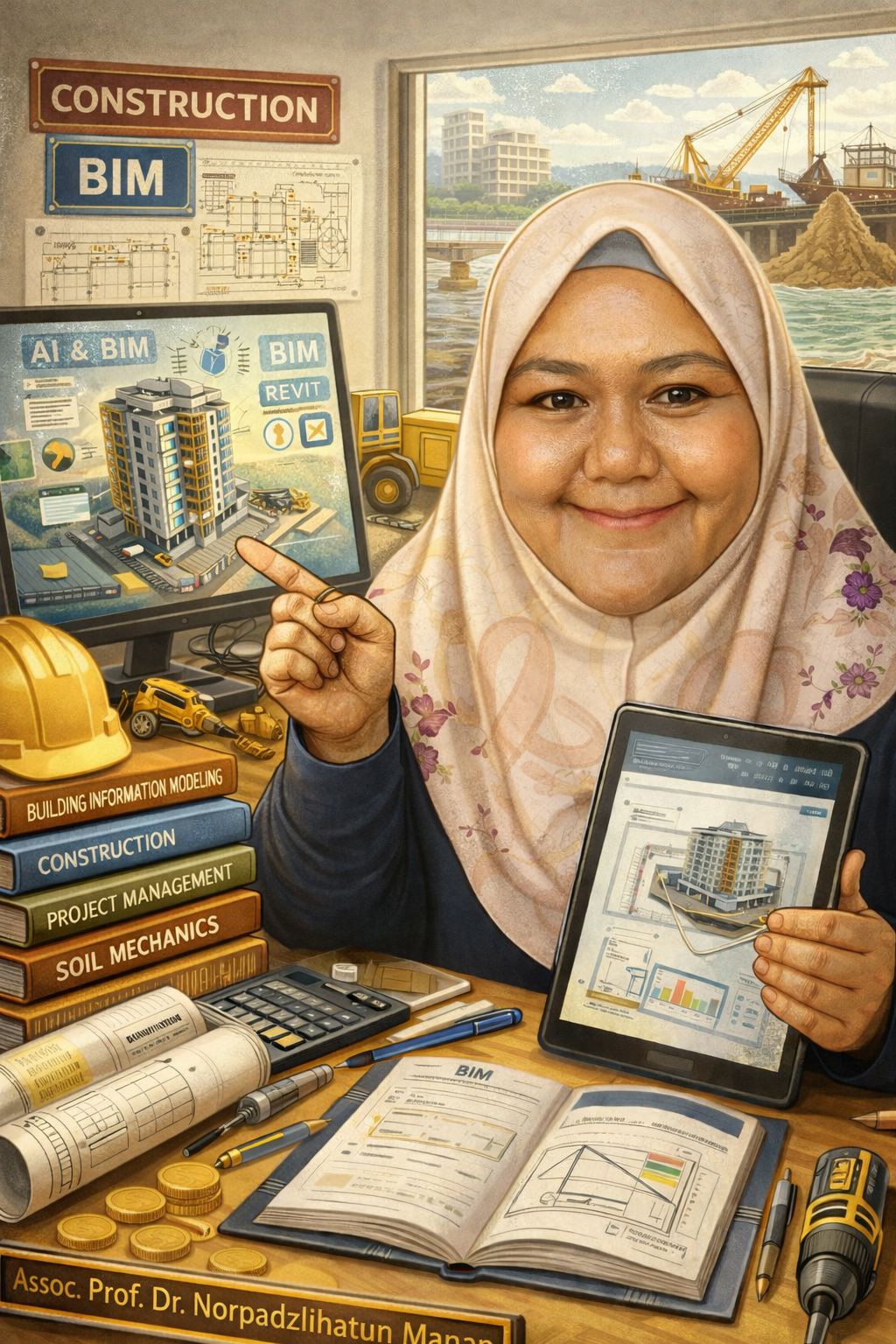
This image captures a simple but meaningful part of my academic journey. On my desk are digital BIM models, soil mechanics references, and visual reminders of dredging and coastal works. Together, they represent the subjects I teach and research about, but each stands on its own with its own depth, challenges, and impact.
Teaching and researching these three areas have shaped my identity as an educator and researcher, allowing me to engage with students across different dimensions of civil engineering.
Building Information Modelling (BIM): Preparing Students for Digital Construction
BIM represents the digital future of the construction industry. In my classes, students explore how models become communication tools, coordination platforms, and data repositories for project lifecycle management.
Beyond software skills, BIM teaching focuses on:
- Collaborative thinking
- Visual communication
- Project coordination awareness
- Understanding digital workflows in construction
Seeing students move from confusion to confidence when navigating BIM models is always rewarding. It reflects how digital literacy is becoming essential for future construction technologists and engineers.
Soil Mechanics: Understanding the Ground Beneath Every Structure
While BIM represents the digital side of construction, soil mechanics reminds us that engineering begins with the ground. Teaching this subject involves guiding students through concepts that are often abstract but critically important.
From shear strength to consolidation and settlement, soil mechanics helps students appreciate that safe and sustainable structures rely on sound geotechnical understanding. It also strengthens their analytical thinking and problem-solving skills.
Moments in class when students finally grasp why soil behaviour matters are always memorable, because they realise that unseen ground conditions can determine project success.
Dredging: Exploring Coastal and Marine Engineering Realities
Dredging introduces students to the dynamic world of coastal and marine infrastructure. This subject opens discussions on land reclamation, port development, sediment management, and environmental considerations.
For many students, dredging is a new and fascinating area. It expands their perspective beyond conventional construction sites and highlights the importance of infrastructure that supports trade, coastal protection, and urban development.
Researching dredging allows me to share practical insights and research experiences related to marine engineering: an area that continues to grow in relevance.
A Unique Teaching and Research Journey
Having the opportunity to teach and research on BIM, soil mechanics, and dredging is something I truly value. Each subject offers a different lens into construction:
 BIM shapes digital competency Soil mechanics builds fundamental engineering understanding Dredging broadens exposure to coastal and marine infrastructure
Together, they reflect the diversity of construction education; and position my teaching and research journey in a unique space where digital innovation, fundamental theory, and specialised applications coexist.
Closing Reflection
This workspace is a small reflection of a larger academic passion: nurturing students across multiple knowledge domains and encouraging them to see the breadth of opportunities within civil engineering.
Teaching and researching these subjects are more than delivering content; it is about inspiring curiosity, building confidence, and preparing students for the complex challenges of the built environment.
And perhaps, it is this diversity in teaching and researching that makes the journey both meaningful and one of a kind.